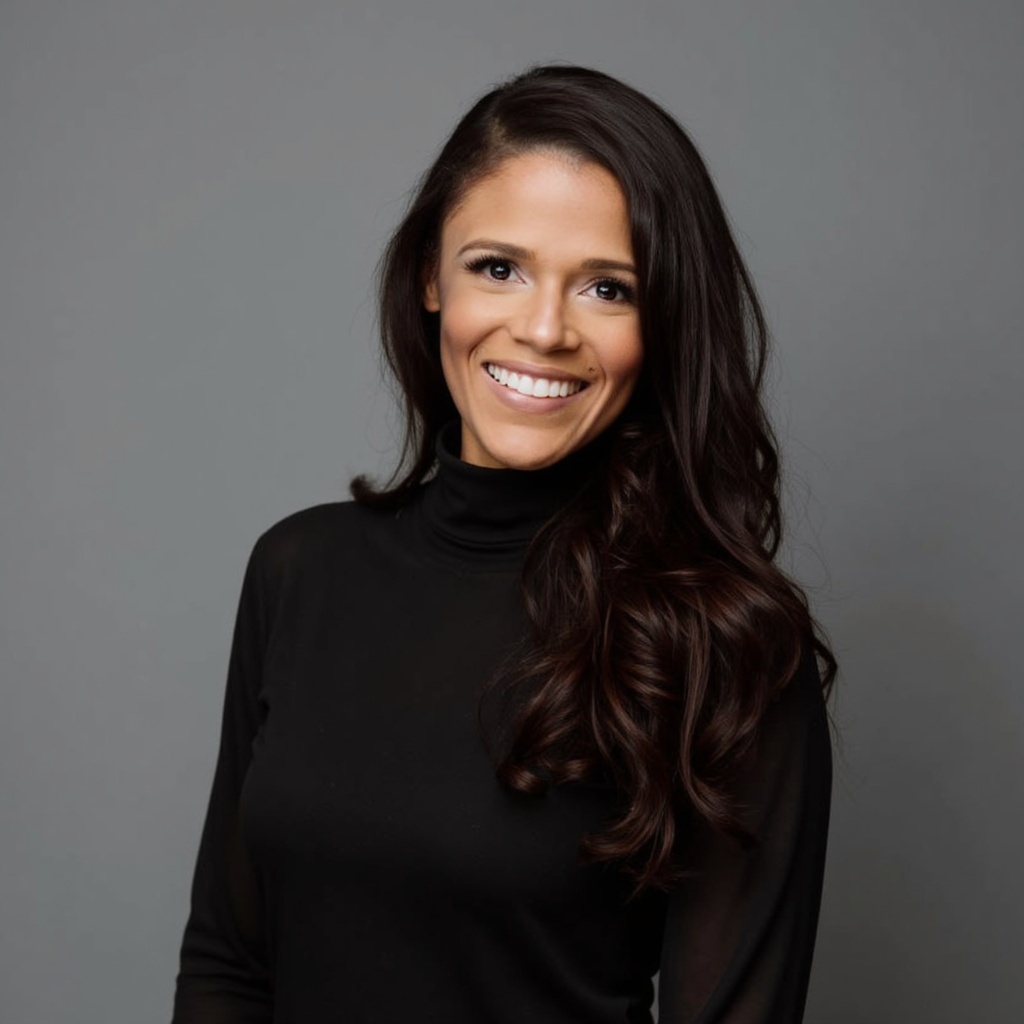
Meet Elena
I Believe Big Vision Deserves the Structure to Carry It.
I'm Elena Rogers—founder of Compass & Clarity Operations, fractional executive operations partner, systems thinker, and the person who is usually asking:
"Okay, but how are we actually going to make this happen?"
I've built my career working alongside leaders with ambitious ideas, competing priorities, full calendars, growing teams, and more moving pieces than any one person should reasonably be expected to hold.
And somewhere along the way, I realized something:
The problem usually isn't the vision.
It's everything between the vision and the execution.
That's the space where I do my best work.
My Philosophy
I've Never Been Interested in Simply Checking Boxes.
I'm interested in understanding why the box exists in the first place.
- Why does this process take seven steps?
- Why does that decision always come back to the founder?
- Why are we discussing the same problem for the third meeting in a row?
- Who actually owns this?
- Where did that follow-up go?
- What information does the CEO need to make this decision?
And—perhaps most importantly—
Is there a better way?
That curiosity has shaped the way I approach operations.
I don't see a calendar as just a calendar. I see priorities.
I don't see a meeting as just a meeting. I see decisions, ownership, and opportunities for momentum.
I don't see a messy process and think, "Someone needs to work harder."
I think:
"Something about the system isn't working."
How I Got Here
My Career Has Always Lived Somewhere Between People, Strategy + Execution.
I've worked across executive support, operations, customer experience, higher education, project and program management, entrepreneurshipand strategic partnership.
On paper, those roles may look different. In practice, they've repeatedly asked me to do the same thing:
Walk into complexity and create clarity.
- I've coordinated high-stakes priorities alongside executives and organizational leaders.
- I've managed programs, budgets, projects, communications, systems, workflows, stakeholders, and the endless details sitting between an idea and a successful outcome.
- I've built processes where none existed.
- I've documented what previously lived in someone's head.
- I've created dashboards to make invisible work visible.
- I've helped leaders organize priorities when everything felt important.
- I've coordinated across people who weren't always speaking the same operational language.
- And I've learned how to move comfortably between the 30,000-foot conversation and the tiny detail capable of derailing it.
That combination—strategy and execution—is where I thrive.
Why Compass & Clarity Exists
Because "I'll Just Handle It" Eventually Stops Working.
I've spent enough time beside leaders to recognize the pattern.
The founder starts the business.
They know everything. They touch everything.
They make the decisions. They build the relationships.
And because they're capable, they become incredibly good at holding the whole thing together.
Until the business grows.
Suddenly the strength that helped build the company becomes a bottleneck. Not because the founder is doing anything wrong. But because the business has reached a point where leadership needs infrastructure.
That's why I created Compass & Clarity. Not simply to take tasks away from busy leaders. But to help create a better way for the business to operate around them.
- Better systems.
- Clearer priorities.
- Stronger ownership.
- More visibility.
- Consistent follow-through.
And a trusted strategic partner who understands both where you're trying to go and what has to happen between here and there.
The Name
Why Compass & Clarity?
Because when things become complicated, leaders don't necessarily need more information.
They need direction.
A compass doesn't make the journey for you. It helps you understand where you are, where you're going, and whether you're still moving in the right direction.
And clarity?
Clarity turns movement into intentional progress. It tells us:
- This matters.
- This doesn't—at least not right now.
- This needs an owner.
- This needs a system.
- This needs a decision.
- This needs to stop.
Compass & Clarity represents the two things I believe every growing leader needs:
A clear direction—and an operating system capable of moving toward it.
How I'm Wired to Work
Calm doesn't mean passive.
I tend to notice two things at once: the people in the room and the system around them.
I notice when a process creates unnecessary friction. When the same conversation keeps resurfacing. When something important doesn't seem to have an owner. When a leader is carrying a decision that should live somewhere else.
But I also notice the human side of the equation—how people communicate, where expectations may be unclear, what isn't being said, and whether the "efficient" solution will actually work for the people expected to use it.
That combination shapes the way I work.
I read between the lines.
Sometimes the problem someone brings me isn't the actual problem. I listen carefully, ask questions, connect information across conversations, and look for the pattern underneath the immediate frustration. I want to understand what's really creating friction before we build something to solve it.
I create calm without avoiding hard things.
I'm naturally collaborative and steady. I don't believe leadership requires creating unnecessary urgency or friction. But keeping the peace isn't the same as keeping quiet. If something isn't working, I'll tell you. If we're solving the wrong problem, I'll ask us to reconsider it. And if the same issue keeps appearing, I'm going to want to understand what's happening underneath it.
I care about the finish line.
Ideas matter. Strategy matters. Great conversations matter. But eventually, something has to happen. I naturally keep track of commitments, decisions, deadlines, open loops, and the small details that determine whether an initiative actually gets across the finish line.
I learn before I prescribe.
Curiosity is one of the ways I work best. Before recommending a new process, tool, automation, or operating rhythm, I want to understand how the business actually works—the people, pressures, history, priorities, and constraints behind it. Sometimes the answer is a new system. Sometimes it's simplifying the one you already have. And sometimes the most valuable thing I can say is, "You don't need another tool."
I build for humans, not just workflows.
I love a good system. I also know that a beautifully designed system nobody uses isn't a good system. The strongest operations account for how real people communicate, make decisions, build habits, navigate change, and get work done. That's why my approach is both operational and deeply human.
High standards. Low ego. Clear ownership. Thoughtful communication. Consistent follow-through.
If you're a personality-test person...
INFJ-T · Enneagram 1w9 + 2 · DISC: Support
HIGH5: Empathizer · Deliverer · Peace Keeper · Philomath · Time Keeper
And if you're not a personality-test person, here's the translation:
I care deeply about people, hold myself to a high standard, love learning how things work, prefer calm over chaos, and feel a slightly unreasonable amount of satisfaction when the loose ends are actually tied up.
In my work, that tends to show up as empathy without avoiding accountability, curiosity without endless analysis, and structure without losing sight of the humans inside it.
The Experience Behind the Partnership
Heart-Led Doesn't Mean Soft on Execution.
My approach is deeply human. My experience is deeply operational.
For more than a decade, I've worked inside the places where leadership decisions become organizational reality—partnering with founders and senior leaders, leading complex operations, managing people and resources, building the systems behind execution, and creating clarity across competing priorities.
My experience spans organizations and industries, but the through-line has remained remarkably consistent: understand what matters, make the path forward clearer, and help people actually move it forward.
Experience at a Glance
10+ Years
Executive operations, organizational leadership + strategic partnership
450+
Employees + contingent personnel supported within complex workforce operations
$500K+
Budget responsibility across program + operational administration
25%
Operational efficiency improvement through workflow redesign, KPI management + standardization
The Work Behind the Experience
Executive Partnership
I've worked directly alongside founders, owners, and senior leaders to turn priorities into decisions, operating plans, communications, and coordinated execution. That includes maintaining visibility across commitments and risks, preparing decision-support materials, tracking what requires executive attention, and helping ensure leadership direction doesn't disappear between the meeting and the work.
Operational Leadership
My experience extends beyond executive support into the operations themselves. I've coordinated work across operations, finance, HR, sales, scheduling, customer experience, programs, and field leadership—and previously led workforce operations supporting a complex environment of 450+ employees and contingent personnel. That experience taught me how decisions travel through an organization—and what happens when they don't.
Financial + Resource Stewardship
Good operations aren't just organized. They have to make business sense. My background includes budget development, forecasting, expenditure oversight, resource allocation, labor and vendor costs, procurement, reconciliation, profitability, and financial decision support—including responsibility for budgets up to $500K+.
Systems + Organizational Execution
I build the infrastructure that helps leaders see what's happening and teams know what happens next. That has included executive dashboards, KPI scorecards, operating rhythms, SOPs, initiative trackers, reporting systems, accountability mechanisms, executive briefings, and repeatable workflows.
The goal isn't more process. It's better visibility, clearer ownership, stronger decisions, and more consistent execution.
Where the discipline started.
My operational foundation began in the U.S. Army, where precision, adaptability, discretion, resource coordination, and disciplined follow-through weren't professional preferences—they were expectations.
The environments have changed since then. Those standards haven't.
Education + Professional Development
Education
Master of Arts — History
University of North Carolina at Charlotte
Bachelor of Arts — History
Fayetteville State University
Bachelor of Arts — Management · In Progress
Loyola University Chicago
Professional Development
Director of Operations Certification
The Ops Authority
PMP Certification · In Progress
Project Management Institute
Executive Assistant Business Partner Certification · In Progress
HubSpot Digital Marketing Certification
Technology in Service of the Work
I use technology to create visibility, reduce friction, strengthen decision-making, and give leaders back capacity—not simply to add more tools to the stack.
My work spans executive dashboards, KPI development, operational reporting, business process design, workflow automation, AI-assisted research and synthesis, CRM systems, and collaborative work management.
Google Workspace · Microsoft Office · Advanced Excel · Slack · Notion · Salesforce · HubSpot · GoHighLevel · Monday.com · Asana · ClickUp · Smartsheet · Trello · Zapier · ChatGPT
Experience matters. But what matters more is what I do with it.
I bring the operational depth to understand what's happening, the judgment to know what deserves attention, and the follow-through to help move it forward—all while remembering that behind every workflow, decision, deadline, and dashboard are actual people doing the work.
That's the partnership I built Compass & Clarity to provide.
But My Résumé Isn't the Most Important Thing I Bring Into the Room.
I bring perspective.
I've experienced seasons where life looked beautifully organized on paper—and seasons where the plan changed completely.
I've learned that clarity doesn't always mean knowing exactly what the next five years look like.
Sometimes clarity simply means understanding:
- Where am I now?
- What matters most?
- And what's the next right move?
That philosophy shapes far more than the name of my business. It shapes the way I work with people.
I don't expect leaders—or businesses—to have everything perfectly figured out before we begin.
We start where you are. We figure out what matters. And then we build forward from there.
How I Think About AI
AI-Enabled. Human-Led.
I believe deeply in using technology to make work better.
I'm interested in better ways of working—not technology for technology's sake. I use AI to help synthesize information, strengthen documentation, accelerate research, improve workflows, surface patterns, and reduce the administrative friction that consumes valuable time.
But faster isn't automatically better.
Someone still has to understand the context. Read the room. Ask the question the data can't answer. Recognize when a technically efficient solution will create a very human problem. Exercise judgment. Build trust. And take responsibility for what happens next.
That's the part of operations I don't believe we should automate away.
AI can help us see more and move faster. Human judgment helps us decide what matters.
That's what I mean by AI-Enabled. Human-Led.
When I'm Not Building Systems...
You'll Probably Find Me...
outside.
Give me a hiking trail, a little fresh air, and somewhere beautiful to wander, and I'm happy. The outdoors has always been one of the places I go to clear my head, find perspective, and remember that not everything needs to be solved at once.
When I'm not on a trail, there's usually a book nearby. I'm endlessly curious and genuinely love learning—about people, leadership, business, history, and the small things that shape how we live and work.
More than anything, though, I value time with the people I love and conversations that go a little deeper than expected.
And while I genuinely love a beautiful dashboard, I'll choose a meaningful conversation, a good book, or a long walk outside over a perfect spreadsheet every time. Because ultimately, operations isn't about systems for the sake of systems.
It's about creating enough clarity and structure that people have more room for what matters.

You Bring the Vision.
I'll Help You Build the Structure Behind It.
If you've built something meaningful but find yourself carrying more of the business than you should, I'd love to hear what's happening behind the scenes.
You don't need a perfectly articulated problem. You don't need to know which service you need. Start with:
"Here's what's feeling harder than it should."
Let's find the clarity inside the complexity.